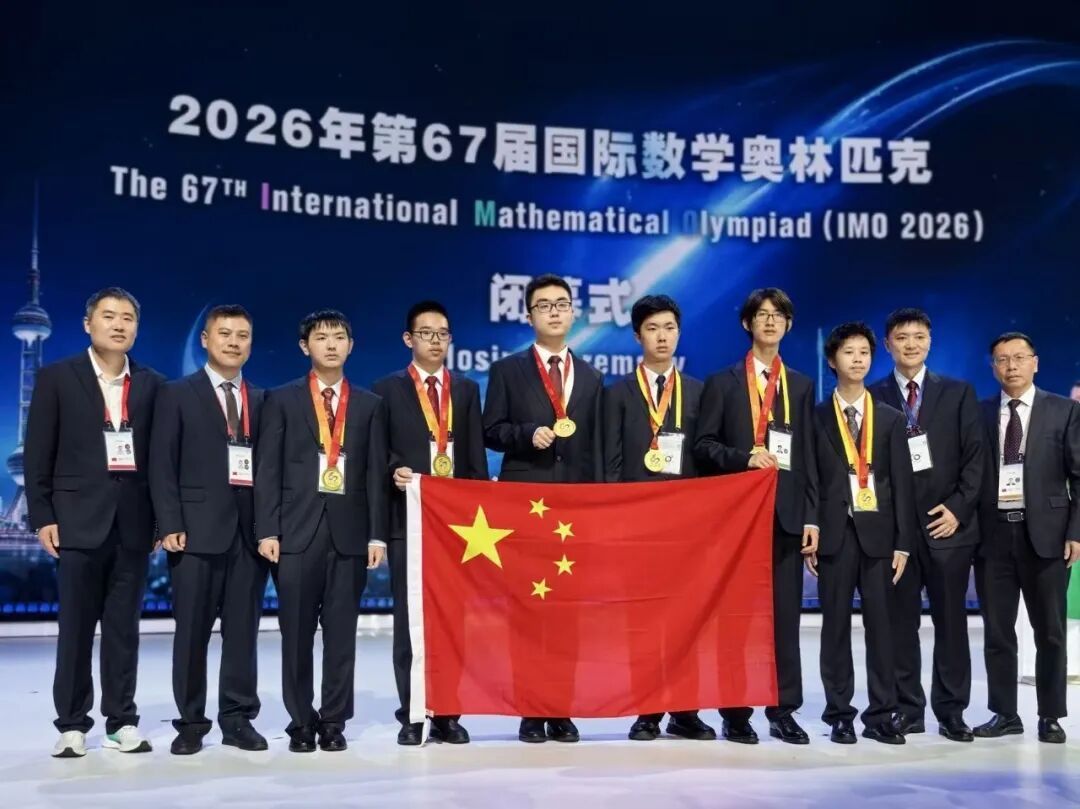
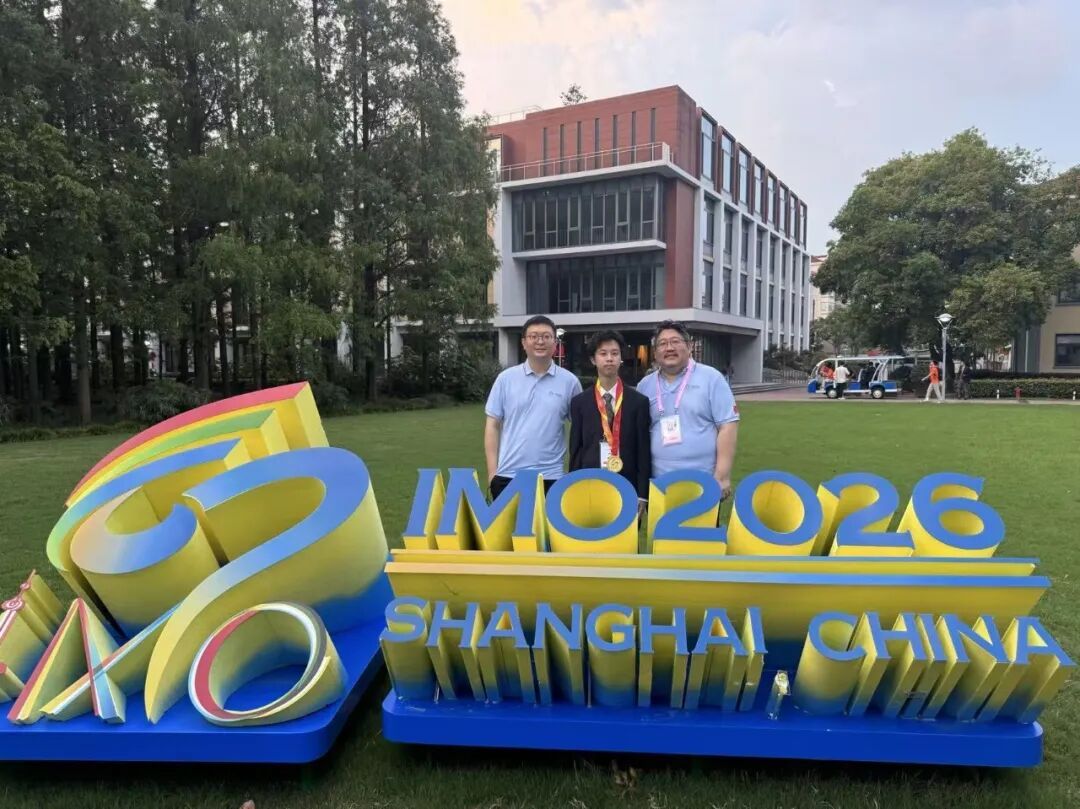
Recently, the 67th International Mathematical Olympiad (IMO 2026) concluded in Shanghai. The Chinese national team won first place overall with a total score of 232 points, with all 6 competing students winning gold medals, setting yet another historic milestone. Peng Zhenqian from the High School Affiliated with Renmin University of China (RDFZ) was one of these six gold medalists. This young man, who will enter Peking University in September of this year, capped off his high school career with a weighty international gold medal. Together with Shi Jiayu, who won a gold medal at the International Biology Olympiad, they have added yet another vivid footnote to RDFZ's innovative talent cultivation system.
From Taxi Routes to Olympiad Gold — Pure Passion as the Foundation
"When I was little, I thought mathematics was just arithmetic, but gradually I discovered that behind mathematics there is logical reasoning, and something deeper." When speaking about his connection with mathematics, Peng Zhenqian said that learning mathematics had imperceptibly changed the way he sees the world and things around him. An experience taking a taxi with his father when he was in primary school gave him his first vivid sense of the charm of mathematical thinking. One time, Peng Zhenqian's father took him, then still in primary school, on a taxi ride. Most people's instinct is to choose the shortest route by distance; but considering traffic, the shortest distance is not necessarily the shortest time. So Peng Zhenqian and his father enthusiastically discussed the underlying logic and advantages of a "time-first" approach.
This seemingly ordinary conversation was a microcosm of the budding of Peng Zhenqian's mathematical thinking. In his eyes, mathematics has never been the cold formulas and theorems in textbooks, but rather multiple perspectives for observing the world.
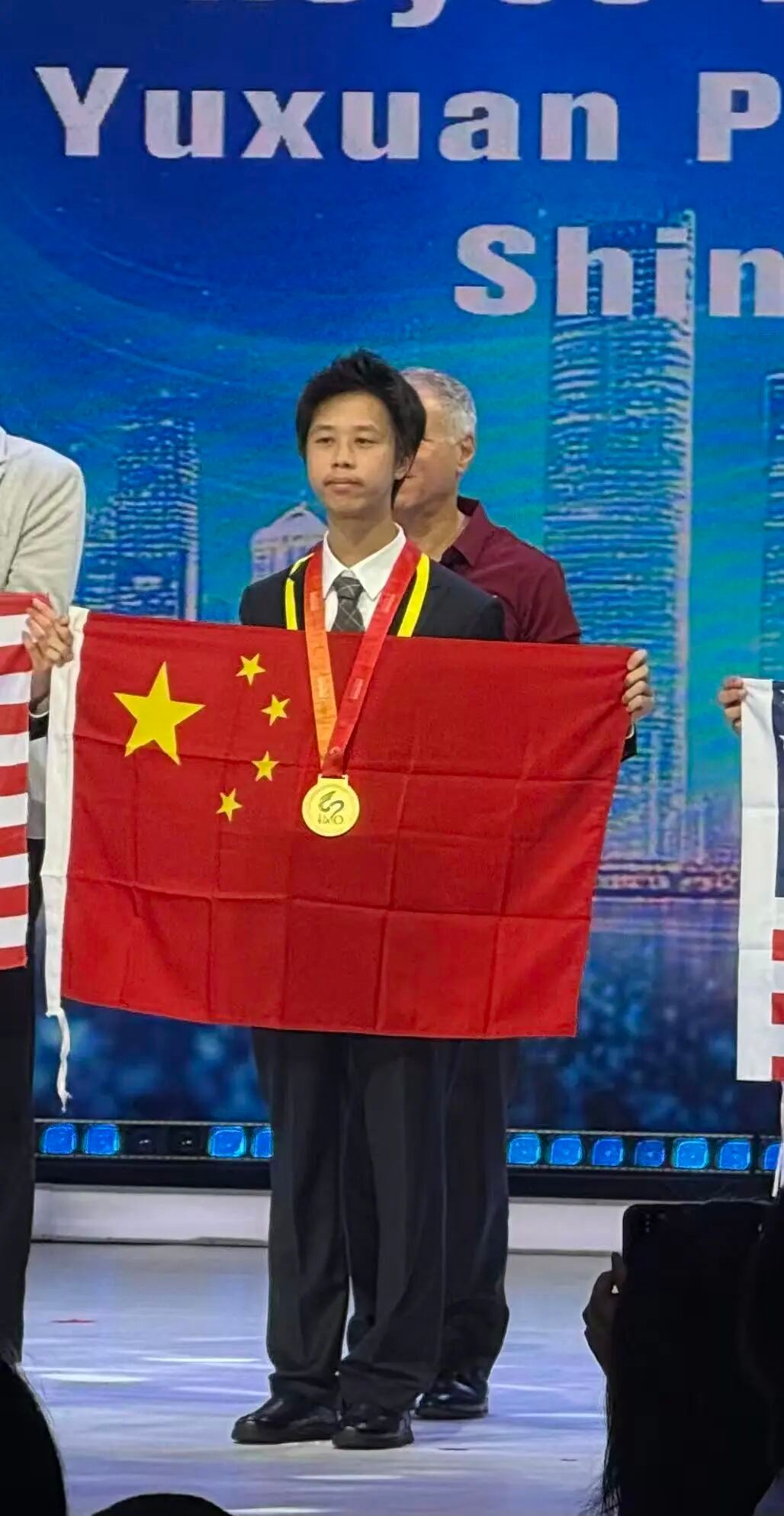
It was precisely this passion rooted in his heart that kept him on the path of mathematical learning with an unswerving purity. "I believe that the study of mathematics should be pure, and should not become a springboard for other utilitarian purposes." These are Peng Zhenqian's own words, and they are his consistent principle of learning. For Peng Zhenqian, his love for mathematics must not be betrayed; he hopes to keep going and sustain his efforts over the long term, and everything else is a by-product of that love. Peng Zhenqian will enroll at Peking University in September of this year to continue his exploration in the world of mathematics.
In the view of Li Hansong, RDFZ's mathematics competition coach, this pure passion is the core driving force that allows Peng Zhenqian to go far. "Mathematical competition study has an endpoint, but the pursuit of mathematics is boundless. The road of future learning will not be easy; unlike solving competition problems, mathematical research often explores unknown questions with no standard answers. To be able to persist, an indispensable element is the love for mathematics in one's heart."
A "Slow Starter" Makes a Comeback — Mental Fortitude as the Ultimate Contest
In coach Li Hansong's eyes, Peng Zhenqian is a typical "slow starter" — not very talkative in daily life, steady in temperament, with a tenacity to persist to the end in things he loves. "Mathematical competitions ultimately test, to a great extent, the mental fortitude of the competitors. Peng Zhenqian happens to possess strong resilience under pressure." Li Hansong commented, and this ability to withstand pressure was fully demonstrated at the critical juncture of national team selection.
To make it to the international stage of the IMO, every competitor must pass through multiple rounds: the National High School Mathematics League in September each year selects provincial and municipal teams; the Chinese Mathematical Olympiad (Winter Camp) in late November to early December determines the top 60 students nationwide to enter the national training team; then in March of the following year, through two stages of selection from the training team, only 6 students can ultimately be selected for the national team. Each step is like crossing a narrow bridge in a crowd of thousands.
On the last day of the first stage of the training team selection, Peng Zhenqian made a small mistake, fell temporarily behind, and was under enormous psychological pressure. In the view of Tang Xiaomiao, RDFZ's head mathematics competition coach, "Students who have reached this stage are all of roughly equal ability; the key is mindset — you must stay steady." During that period, the coaching team would communicate with Peng Zhenqian every day after the exams to help him process his emotions.
Having set aside his psychological burden, Peng Zhenqian demonstrated remarkable resilience in the second stage of selection. Over four days of exams, he gritted his teeth and persisted each day, steady and methodical, and ultimately made a stunning comeback on the last day of exams, achieving a perfect score on that day's paper, and successfully making it onto the list of six national team members. This reversal became one of the most unforgettable experiences of his competition career, confirming the truth that "a truly strong person is one who can still perform steadily under pressure."
A Fertile Ground for Education Tailored to the Individual — Respecting Every Pace of Growth
Peng Zhenqian's growth is not an isolated case. At RDFZ, "slow starter" students can also find a pace of growth that suits them — behind this is the school's consistent educational philosophy and mature cultivation system. "RDFZ has always taken the implementation of the Party's educational guidelines as its fundamental guiding principle, firmly grasped the political nature of education, and integrated the cultivation of virtue and nurturing of talent throughout the entire process of talent cultivation." Tang Xiaomiao explained. For many years, RDFZ has consistently organized students to visit the Unknown Heroes Memorial in Xishan, Beijing; the site of the 1st National Congress of the CPC in Shanghai; the Red Flag Canal in Anyang, Henan; Xingguo in Jiangxi; Yan'an in Shaanxi; and other red education sites for study tours, allowing students to strengthen their ideals and convictions and temper their willpower and character by following in the footsteps of revolutionary history.
In terms of academic cultivation, the school has consistently upheld the core educational philosophy of "respect individuality, unlock potential." Relying on its Early Cultivation Program, RDFZ has built a diverse growth platform for students of different characteristics, the most representative of which is the independent study course system. Students enjoy at least half a day per week of independent study time, with courses covering academic competitions, science and technology innovation, cultural arts, sports, public welfare and environmental protection, and many other fields.
Hu Jichao, the person in charge of academic competitions at RDFZ, further explained the school's cultivation ideals: "We want to discover every student with a special talent, build a platform for every student with a special talent, and give every student the opportunity to experience and learn about a subject from scratch. Through a comprehensive assessment system and the rich experience of teachers, we discover each student's strengths and guide them toward a path better suited to their development."
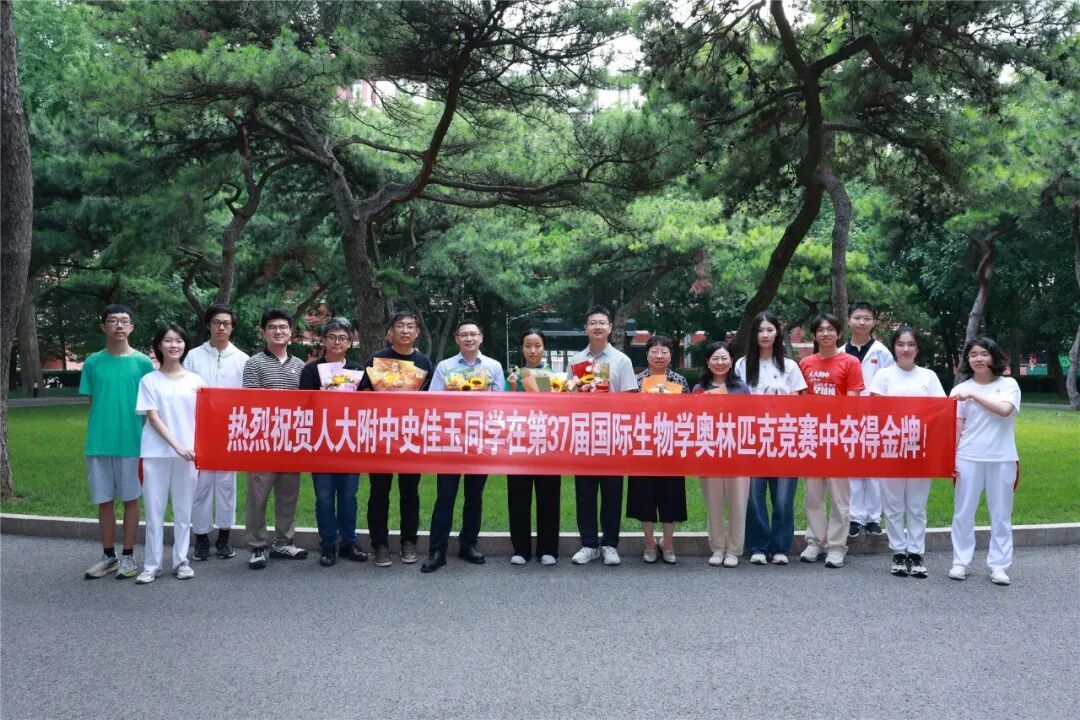
Shi Jiayu, who won a gold medal at the 37th International Biology Olympiad this year, is another vivid illustration of this educational philosophy. In the eyes of competition coach Teacher Yang Debao, she "discovered her true interest relatively late." Shi Jiayu did not start out with a clear goal; instead, she gradually discovered the subject she loved through learning and growing. Shi Jiayu participated in mathematics competition study throughout junior high school, and two years later, in 9th grade, biology teacher Wang Xiaoyue discovered her talent in biology — she demonstrated exceptionally strong modeling thinking and enthusiasm for inquiry on complex problems such as genetic laws and enzyme kinetics. Shi Jiayu began biology competitions from scratch, systematically studying laboratory techniques and the knowledge framework with Teacher Wang Yiwei in 10th grade, and in 11th grade Teacher Yang Debao developed a customized cultivation plan for her, after which she ultimately broke through barrier after barrier to win an international gold medal. Her cross-disciplinary growth from mathematics to biology is the best proof of RDFZ's philosophy of "discovering potential" and "teaching in accordance with individual aptitude."
From Problem-Solving to Research — Cultivating Scientific Literacy Oriented Toward the Future
In many people's impression, competition training is equivalent to doing large volumes of practice problems, but at RDFZ, competition education has a far deeper educational goal — not only to cultivate contestants who can solve problems, but more importantly to nurture innovative talents with complete research competencies who are oriented toward the future.
"Teachers do not place themselves in the role of transmitters, but rather encourage students to discuss, research, and refine every problem, stimulating students' potential and using the wisdom of one student to ignite the wisdom of a group of students." Hu Jichao stated that in RDFZ classrooms, the role of the teacher is more like a "pathfinder" and "spark-lighter." In the face of scientific truth, the school encourages students to express their views with reason and evidence, and also allows students to make mistakes and correct them — just as RDFZ Principal Mi Qi said: "We need both fast iteration and slow rooting." In this open and inclusive discussion environment, students grow from "willing to communicate" to "good at communicating," with their logical expression abilities and critical thinking both receiving full development.
Even more distinctive is RDFZ's particular emphasis on cultivating students' practical and research abilities, which forms a sharp contrast with the competition training model at most schools that focuses primarily on problem-solving. Taking physics competitions as an example, every cohort of students selects actual problems from that year's Young Physicists' Tournament as their research direction, and through a complete process of literature review, experimental observation, theoretical model construction, and experimental verification, they personally experience the full process of scientific research. This kind of training allows students to encounter research thinking early on, laying a solid foundation for future academic research at universities.
Today, Peng Zhenqian is about to step into Peking University carrying his pure passion for mathematics, continuing to explore in an even broader mathematical world. Shi Jiayu will carry on her curiosity and exploration of the vast world of biology at Tsinghua University. And RDFZ's story continues — here, every curiosity is carefully protected, every pace of growth is carefully respected, and every child's potential has the opportunity to be ignited. As more and more young people devote themselves to mathematics, biology, and other sciences out of pure passion, they will ultimately grow into the formidable force supporting the nation's future of innovation and development.
Reporter: Zhao Lei Editor: Zhang Bin


