On May 19, 2026, a mathematics education and teaching seminar hosted by the School of Mathematics and Science Education and the Mathematics Education Research Center of Beijing Institute of Education, and organized by The High School Affiliated to Renmin University of China (RDFZ), was held in the Shaw Building Auditorium at RDFZ. Themed “Educational Practice Integrating the Development of Algebraic Thinking and Mathematical Culture,” the seminar aimed to explore ways to put students’ core competencies into practice and advance subject-based education, while building a high-quality platform for exchange and cooperation in mathematics education within and beyond Beijing.
Xiao Wen, member of the CPC Standing Committee and Vice President of Beijing Institute of Education; Mi Qi, Deputy Party Secretary of RDFZ and RDFZ United Schools, Principal of RDFZ, and Executive Vice President of RDFZ United Schools; Dr. Zhang Jianyue, Chair of the Secondary School Mathematics Teaching Committee of the Chinese Society of Education; Professor Jia Suijun of Zhejiang International Studies University; Liang Liping, Vice Principal of RDFZ; Yan Yaodong, Deputy Director of the Academic Affairs Office of Beijing Institute of Education; and Zhang Xuebing, Vice Dean of the School of Mathematics and Science Education at Beijing Institute of Education, attended the opening ceremony. More than 260 mathematics teachers participated, including mathematics teaching-research specialists from districts across Beijing, participants in backbone-teacher programs, frontline teacher representatives, and a team of distinguished teachers from Zhejiang. Associate Professor Feng Qilei, Director of the Department of Mathematics at Beijing Institute of Education, presided over the opening ceremony. Principal Mi Qi first delivered welcoming remarks. Mi noted that mathematics is a core discipline for shaping thinking and cultivating competencies. In the face of the opportunities and challenges brought by the accelerating arrival of the AI era, mathematics education should attach importance to the integration of mathematics and AI. RDFZ has consistently rejected a single-minded examination-oriented approach and has worked to create mathematics classrooms characterized by depth and thoughtful inquiry. Looking ahead, the school will continue to uphold an open and inclusive attitude of mutual learning and shared improvement, working with colleagues across the city to cultivate the fertile ground of mathematics education.
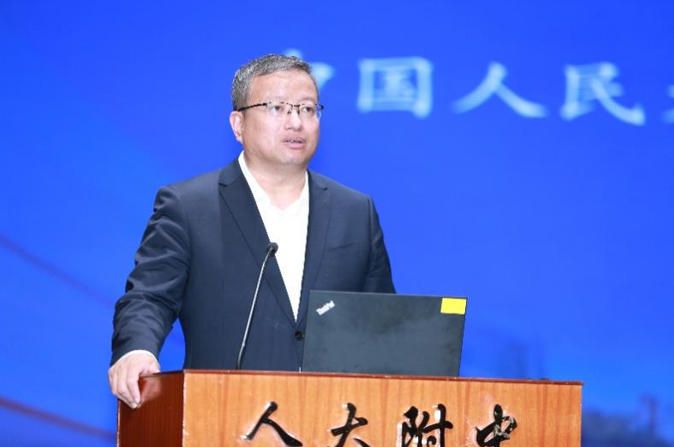
Xiao Wen delivered remarks. Xiao emphasized that China’s mathematics curriculum reform in basic education is currently entering a deeper stage of transition toward core competencies. Algebraic thinking embodies the abstraction and structure of mathematics, while mathematical culture provides an important window into the nature of mathematics. Integrating the two is highly relevant to addressing the persistent teaching challenge of students who can calculate but do not know how to think mathematically. Xiao encouraged all participating teachers to come with questions, participate actively in exchanges, focus on translating ideas into practice, and organically incorporate the outcomes of the seminar into frontline teaching.
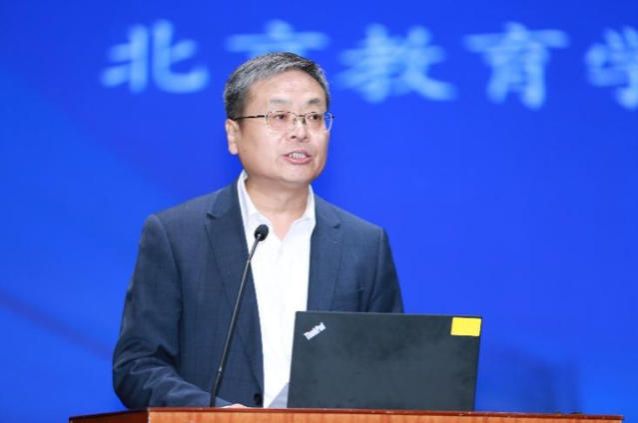
During the keynote session, four experts provided substantial academic guidance for mathematics education from different perspectives. Dr. Zhang Jianyue delivered a presentation titled “Reflections on Cultivating Innovative Mathematical Talent in the AI Era,” offering an in-depth discussion of the essential characteristics of, and development pathways for, outstanding innovative mathematical talent in the age of digital intelligence.
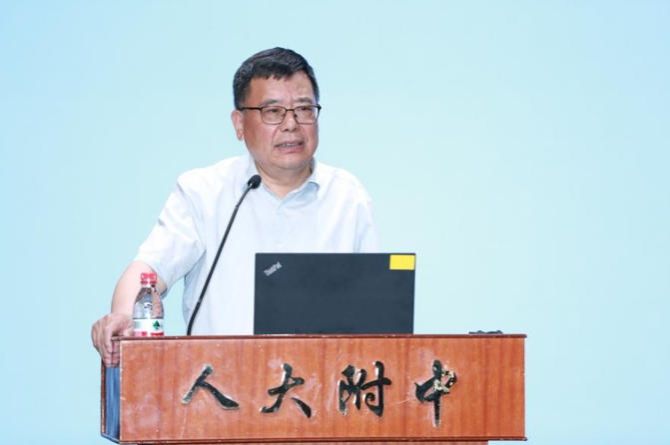
Professor Jia Suijun presented “The History of Algebra and Its Implications for Teaching.” By tracing the historical evolution of algebra, the presentation revealed the cultural trajectory of the development of algebraic thinking and its implications for teaching.
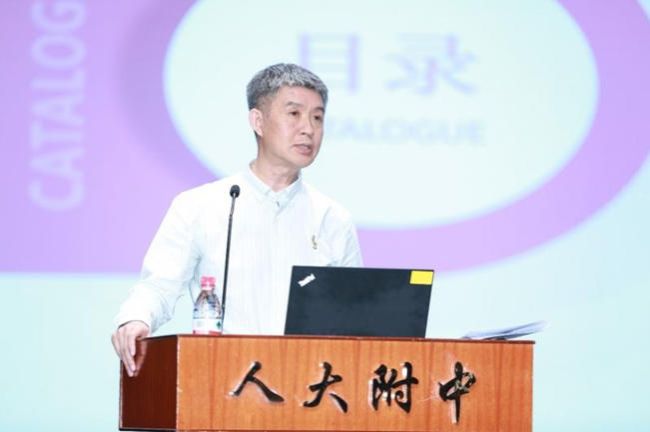
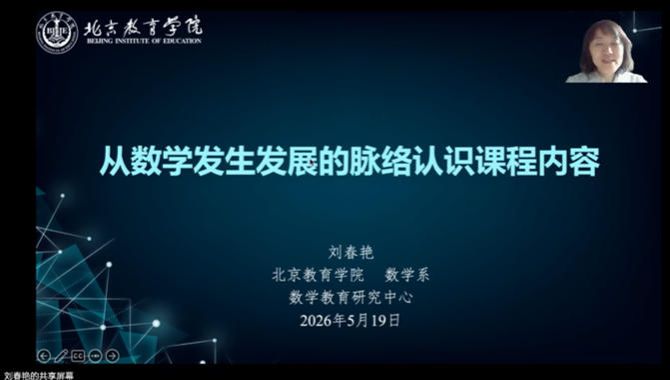
Professor Liu Chunyan of the School of Mathematics and Science Education at Beijing Institute of Education delivered a video presentation titled “Understanding the Mathematics Curriculum through the Historical Emergence and Development of Mathematics,” guiding teachers to grasp the nature of the mathematics curriculum from a holistic disciplinary perspective.
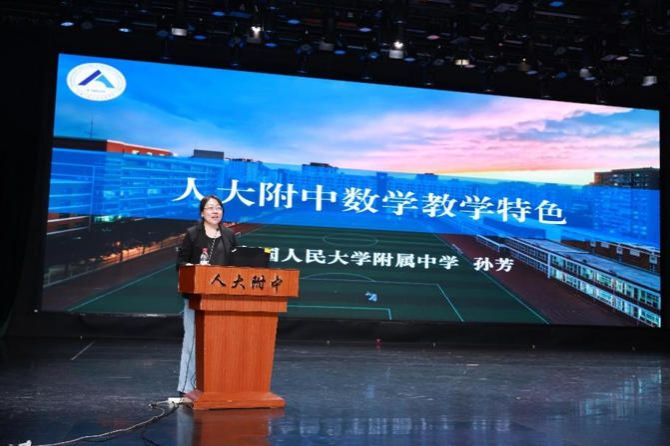
Sun Fang, Head of the Mathematics Teaching and Research Group at RDFZ, shared a presentation titled “Distinctive Features of Mathematics Teaching at RDFZ,” comprehensively showcasing the school’s strong experience in developing high-quality classrooms and advancing subject-based education.
The classroom demonstrations centered on thinking and illuminated the principles of algebra. Distinguished teachers from Beijing and Zhejiang simultaneously presented six high-level research lessons at different venues, vividly demonstrating practical pathways for integrating the development of algebraic thinking with mathematical culture.
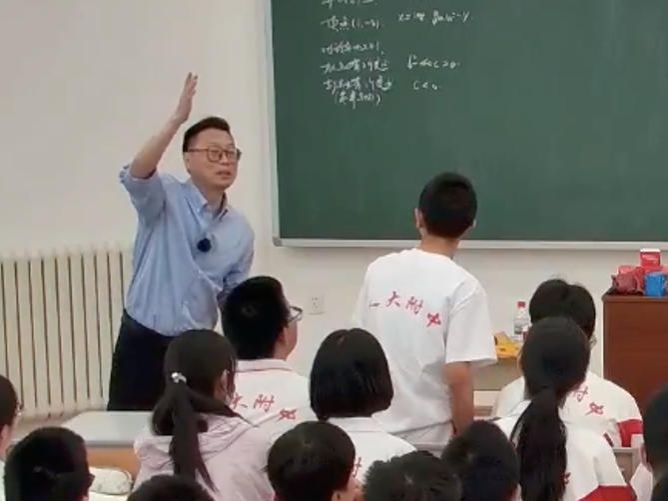
Grade 9 venue: Chen Shiwen of Jiashan Experimental School Affiliated to Zhejiang Normal University taught “One Diagram, One World: The Way of Algebra in Quadratic Functions.”
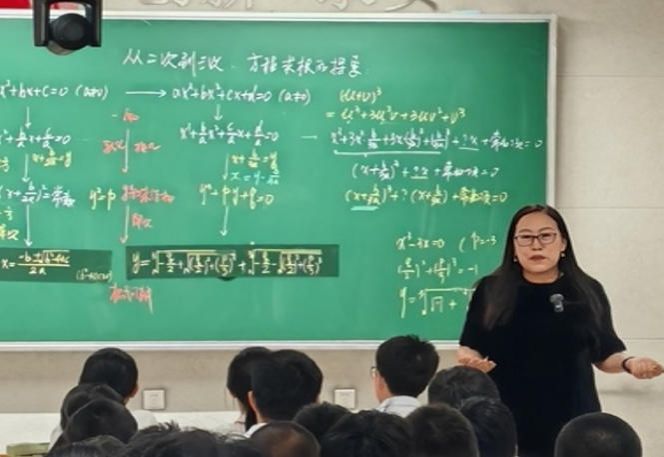
Integrated-program venue: Zuo Lihua of RDFZ taught “From Quadratic to Cubic: Exploring the Solution of Equations.”
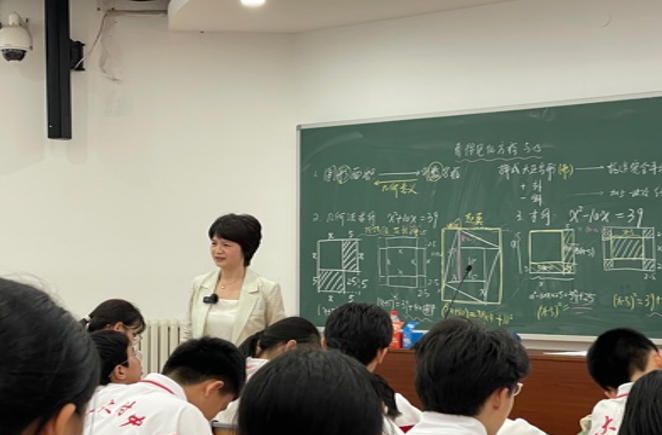
Grade 8 venue: He Qingqing of RDFZ taught “Visible Equations and Triangles.”
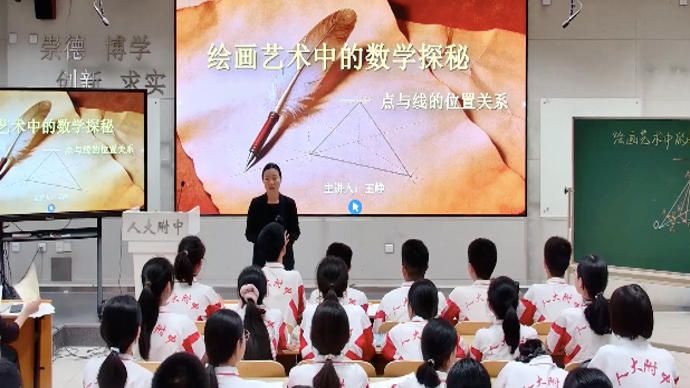
Grade 8 venue: Wang Zheng of the Branch Campus of Beijing No. 5 High School taught “The Order of Points and Lines: The Discovery and Proof of Desargues’ Theorem.”
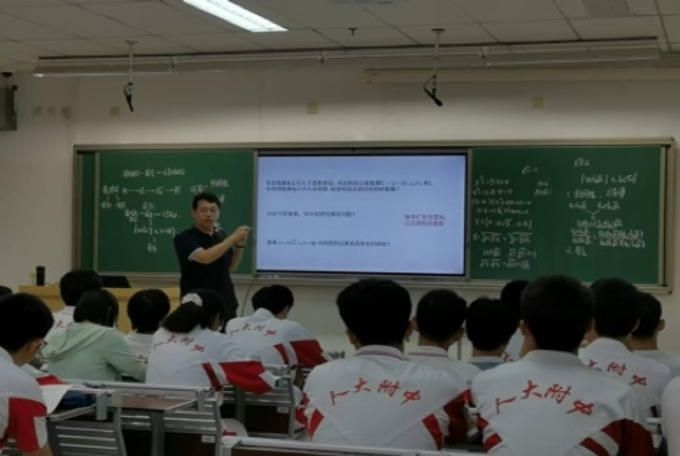
Grade 10 venue: Si Jian of RDFZ taught “Seeking Logic through Extensions of Number Systems and Understanding Complex Numbers through Binary Structures.”
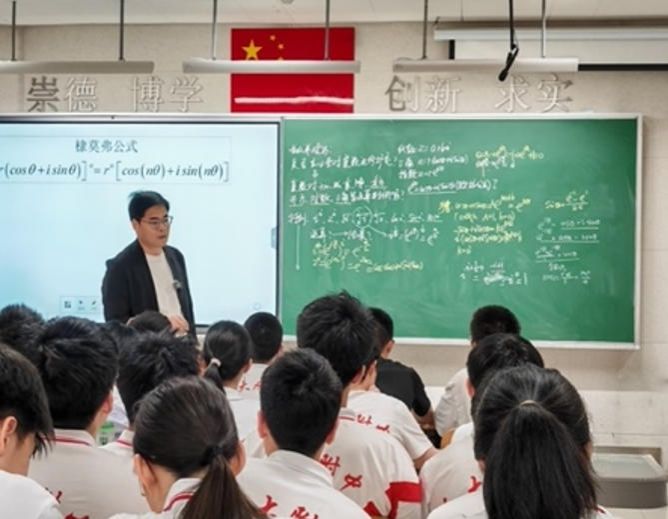
Grade 11 venue: Zhang Zhenhuan of Beijing Zhongguancun High School taught “A Further Exploration of Complex Numbers.”
Dr. Zhang Jianyue, Professor Jia Suijun, Yu Jingning of Fengtai Institute of Education, Wang Yanjing, Vice Principal of Beijing Jingshan School Daxing Experimental School, Li Hailong of Changping Teacher Training School, Sun Fang of RDFZ, Ma Ping, Deputy Director of Haidian Teacher Training School, and the mathematics team from Beijing Institute of Education reviewed the lessons in the respective venues. The experts spoke highly of the demonstration lessons, noting that they reflected deep thinking about the integration of algebraic thinking and mathematical culture. Through structured design, the lessons enabled students to experience the complete thinking process of discovering, formulating, and proving problems. By introducing the historical background of mathematics, the lessons also helped students gain a profound appreciation of how mathematical knowledge emerged and why it became necessary.
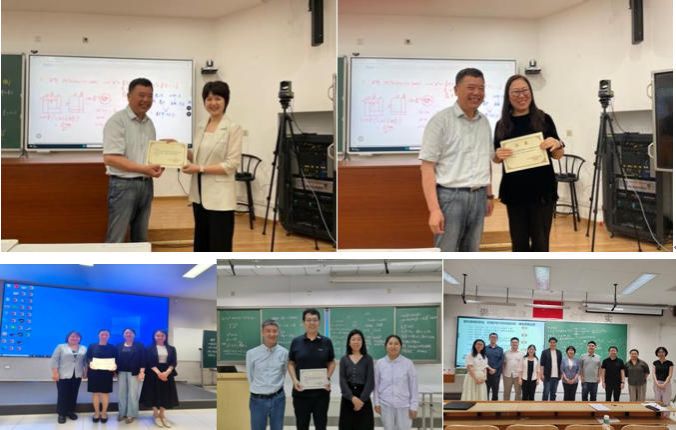
The seminar not only showcased the interim outcomes of Beijing Institute of Education in mathematics teacher training and assessment research, but also provided valuable practical examples for frontline mathematics teachers seeking to optimize curriculum structures, implement core competencies, deepen students’ understanding of the nature of mathematics, and build a mathematically coherent and supportive knowledge system.


