On June 17, the Beijing AI-Empowered Innovative Talent Development Symposium and the RDFZ Affiliated Schools' AI Action Plan Advancement Conference was held at the High School Affiliated to Renmin University of China (RDFZ). Themed "AI-Empowered Innovative Talent Development," the conference responded to the national "Artificial Intelligence + Education" Action Plan and implemented Beijing's deployment for advancing AI education in primary and secondary schools, as well as Haidian District's "Smart Innovation · Empowering Strong Education" Action Plan (2025–2027). The event was organized by the Basic Education Teaching Research Center of the Beijing Academy of Educational Sciences, guided by the China Teacher Development Foundation, and co-hosted by RDFZ (the Innovation Expert Group of the AI Education and Teaching Application Laboratory under the Future Teachers Public Welfare Program), the RDFZ Affiliated Schools System, the Gaoling School of Artificial Intelligence at Renmin University of China, the School of Agricultural Economics and Rural Development at Renmin University of China, and the AI Education Professional Committee of the Innovative Talent Education Research Association, with support from the Beijing Academy of Artificial Intelligence.
Opening Ceremony: Setting a High-Level Vision, Charting a New Blueprint for AI Education
At 8:30 a.m., the conference opened in the main venue — the Yifu Building Auditorium. Distinguished guests in attendance included Zhu Xinkai, Standing Committee Member of the CPC Committee and Executive Vice President of Renmin University of China, and Principal of the RDFZ Affiliated Schools System; Wang Wei, Deputy Secretary-General of the China Teacher Development Foundation; Zhao Gongbo, Deputy Director and Research Fellow of the National Astronomical Observatories, Chinese Academy of Sciences; Zhang Dan, Director of the Basic Education Teaching Research Center of the Beijing Academy of Educational Sciences; Yang Yang, Vice President of the Beijing Academy of Artificial Intelligence; Yao Shoumei, Principal of the Haidian District Teachers' College; Mi Qi, Deputy Secretary of the CPC Committee of RDFZ and the Affiliated Schools System, Principal of RDFZ, and Executive Vice Principal of the RDFZ Affiliated Schools System; Xu Li, Secretary of the CPC Committee of RDFZ and the Affiliated Schools System; Wei Zhewei, Associate Dean of the Gaoling School of Artificial Intelligence at Renmin University of China; Lang Fengwei, Executive Trustee of the Beijing ByteDance Public Welfare Foundation; and Jiao Yance, Product Director of the Beijing Academy of Artificial Intelligence. Members of RDFZ and the Affiliated Schools System's leadership team, relevant experts, and teacher representatives also attended the event.
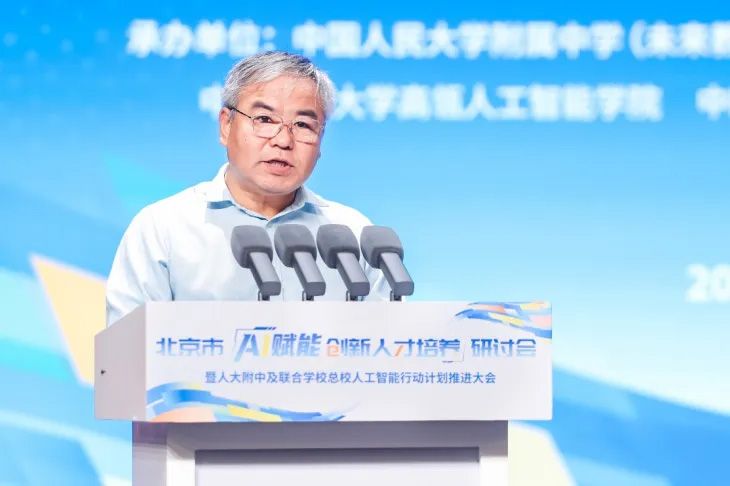
Zhu Xinkai delivered a keynote address. He noted that, as an affiliated school of Renmin University of China, RDFZ has always remained in step with the nation's educational development and aligned with the tide of innovation. The school must not only answer the fundamental question of "What kind of people to cultivate, how to cultivate them, and for whom" but also proactively embrace technological transformation, leveraging artificial intelligence to empower the entire educational process and blazing new paths for the early cultivation of innovative talent. He stated that since the launch of the AI Action Plan, RDFZ and its Affiliated Schools System have systematically advanced the construction of the "Eight Frontier Strategic Curriculum Clusters," actively promoted deep integration of AI with subject-based teaching, and recognized that AI-empowered education must ultimately return to the fundamental goal of nurturing the whole person — putting technology in service of comprehensive human development and the cultivation of an innovative spirit.
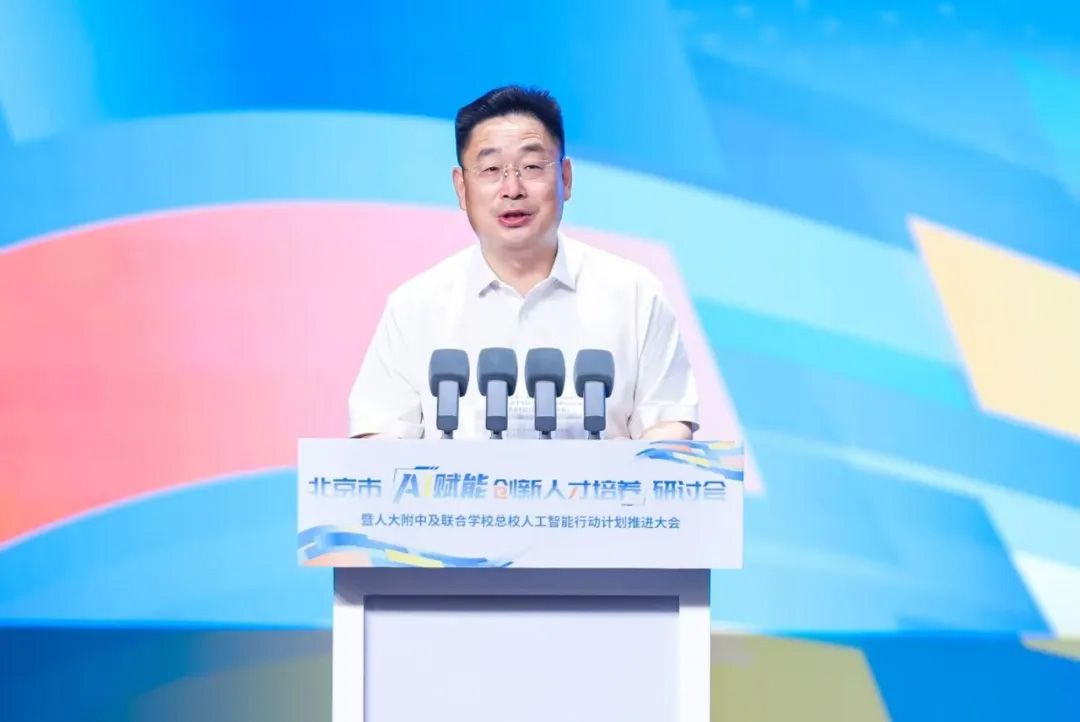
Wang Wei, on behalf of the China Teacher Development Foundation, extended congratulations on the conference and paid tribute to the educators who remain on the frontlines of teaching while actively embracing the transformation brought by AI. She introduced that the Foundation, under the guidance of the Teacher Work Department of the Ministry of Education, established the "Future Teachers" public welfare program, continuously promoting AI-empowered teacher development and educational reform through pilot exploration, resource development, tiered training, and experience dissemination. RDFZ has a solid foundation and remarkable achievements in integrating AI with education and teaching, and she expressed hope that RDFZ would continue to play an exemplary and leading role, providing replicable and transferable practical paths for more schools, teachers, and students to jointly support the development of a strong educational nation.
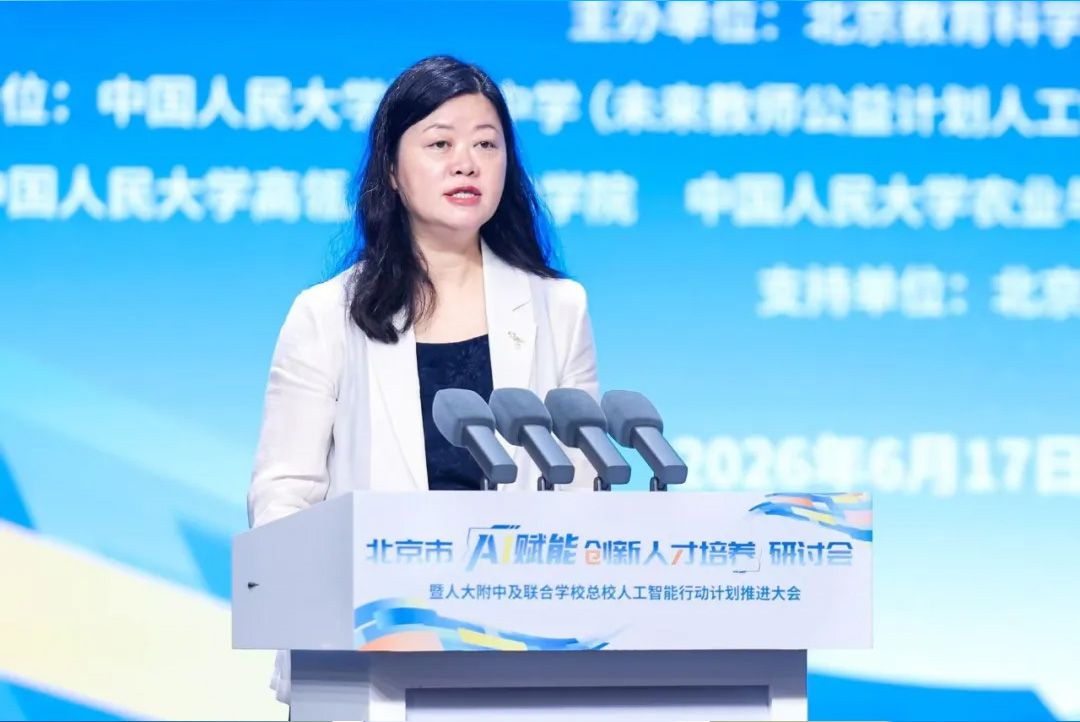
Yang Yang stated in her remarks that the Beijing Academy of Artificial Intelligence would continue to facilitate a two-way exchange between cutting-edge research resources and basic education practice — bringing scientists' resources and AI technologies into schools, while at the same time bringing real educational challenges, teaching experience, and student feedback back to the research frontline, so that technology may better understand, serve, and shape education. She expressed hope that the Academy and RDFZ's Affiliated Schools System would continue to work hand in hand, transforming frontier technologies into warm-hearted educational practice, and jointly nurturing more innovative talents with ideals, capabilities, and a sense of responsibility.
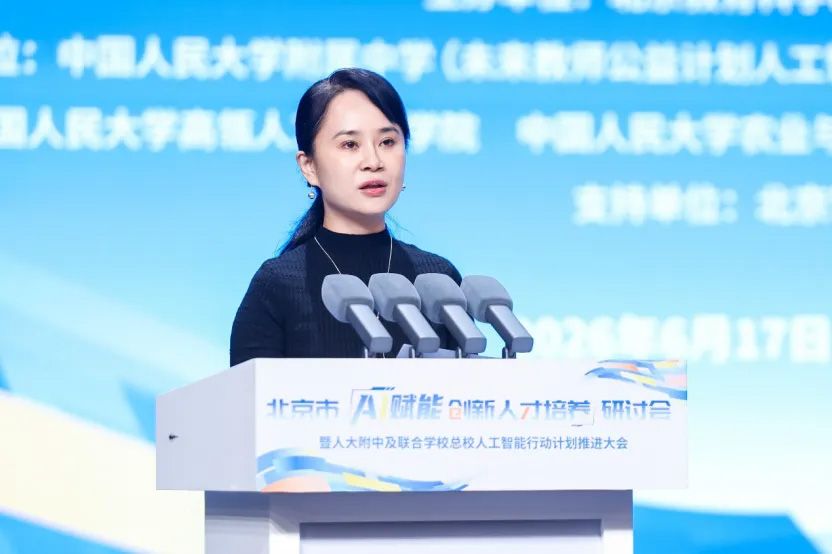
Mi Qi delivered a keynote report. Since the release of the AI Action Plan in January 2026, RDFZ and its Affiliated Schools System have continuously promoted deep integration of AI with education and teaching, teacher development, school governance, and scientific research. Taking the "2-4-6-8" framework as its overall structure, the school has pursued the dual-helix development of value guidance and intelligent literacy, advanced articulated cultivation across four academic stages (early childhood through senior high school), and implemented six major action programs — curriculum, instruction, teachers, space, governance, and ecology — while systematically building the eight frontier curriculum clusters. Over the past five months, the school has moved quickly in areas such as curriculum development, classroom practice, teacher-student training, inter-school collaboration, and connections with university research resources, generating a body of practical achievements in AI-empowered innovative talent cultivation. He noted that educating students in the AI era requires attending both to "fast capabilities" — rapid information acquisition, innovative practice, and engineering development — and to "slow cultivation" — thinking development, value formation, research ethics, and emotional growth — achieving genuine student development through a balance of fast and slow.
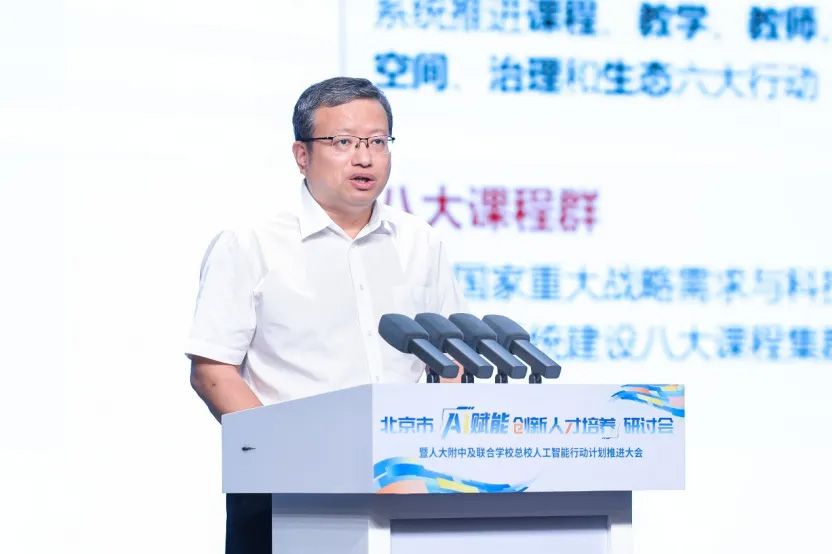
Zhang Dan offered a summary and commentary on the conference. She noted that the event was both a practical showcase of AI-empowered innovative talent cultivation and an important opportunity for basic education to reflect deeply on the values of nurturing in the AI era. AI-empowered education cannot remain at the level of tool use and efficiency gains; it must return to the core goal of developing human creativity, and consider how AI can genuinely promote students' growth in thinking, problem discovery, value judgment, and innovative practice. She also raised questions regarding creativity literacy in the AI age, human-machine collaboration mechanisms, models of cooperation in different task contexts, and the evaluation of AI-empowered creative output, expressing hope that schools, teachers, and research departments would continue to explore and reflect in practice, jointly promoting the higher-quality development of Beijing's basic education in the age of intelligence.
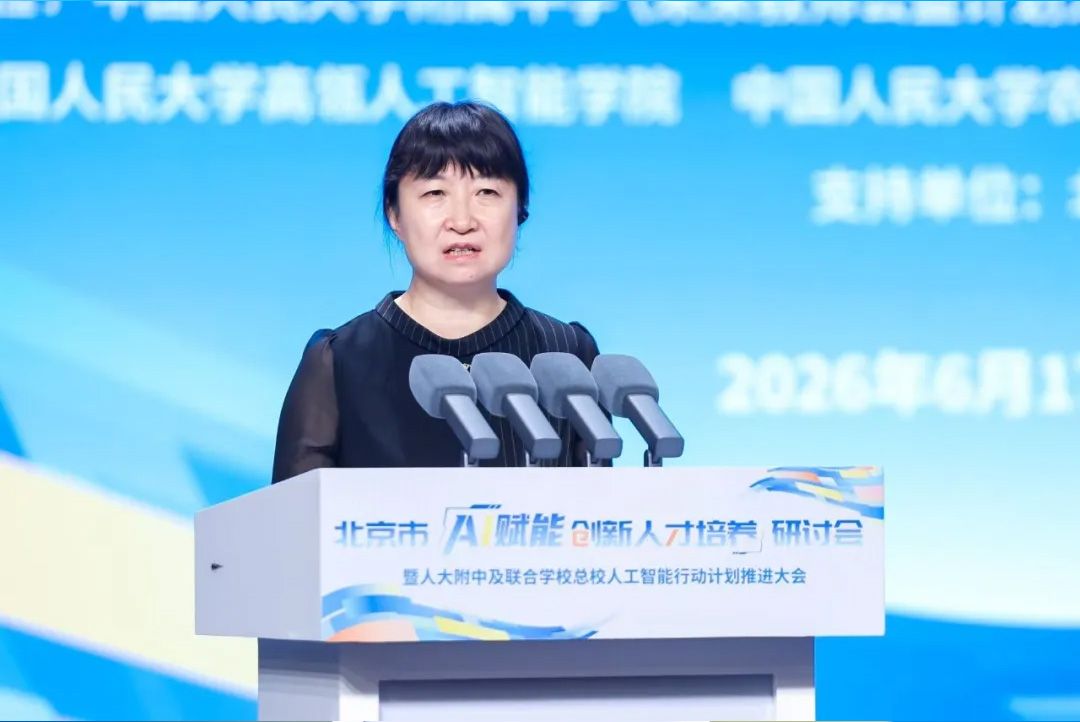
The conference was moderated by Wang Zhenqiang, Director of the Information Technology Teaching Research Office of the Basic Education Teaching Research Center of the Beijing Academy of Educational Sciences.
Classroom Demonstrations: AI-Empowered, Multidisciplinary Integration and Innovation
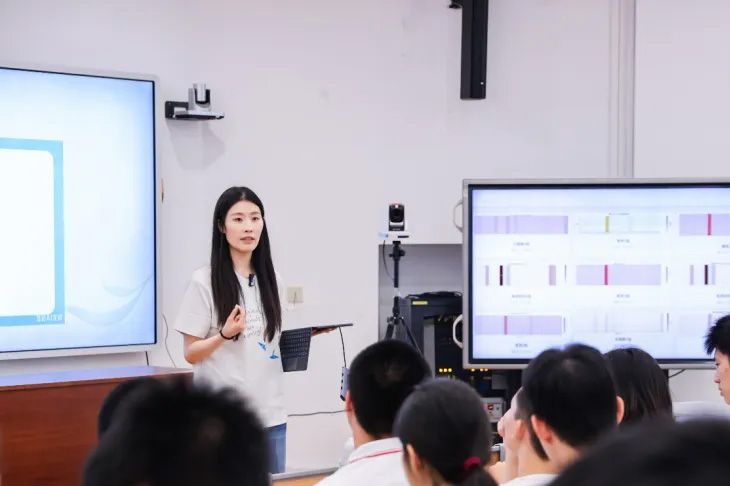
Following the opening ceremony, 23 research lessons on "AI-Empowered Innovative Talent Cultivation" were held simultaneously in classrooms across the campus, covering information technology, mathematics, psychology, biology, chemistry, physics, general technology, ideological and political education, Chinese language, English, geography, history, and other disciplines and interdisciplinary domains, spanning different grade levels of junior and senior high school. The lessons collectively presented the latest explorations of RDFZ and its Affiliated Schools System in AI-empowered classroom teaching.
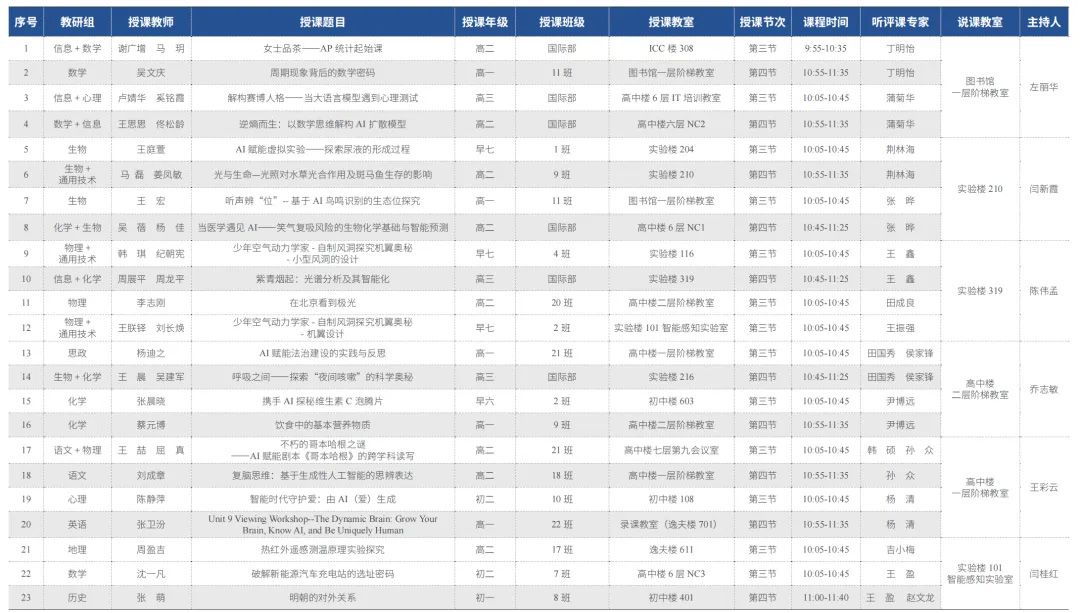
From statistical thinking in the "Lady Tasting Tea" experiment to psychological assessment in "Cyber Personality"; from AI birdsong recognition, virtual experiments, and spectral analysis, to homemade wind tunnels, thermal infrared remote sensing temperature measurement, and site selection for new energy vehicle charging stations; from the construction of the rule of law and critical expression, to historical inquiry and interdisciplinary reading and writing — teachers naturally integrated AI tools into classroom contexts, guiding students to observe, question, model, verify, and articulate within real-world problems.
During the lesson-explanation and expert-commentary sessions, the teaching teachers engaged in reflective exchange on instructional design, technology application, student performance, and classroom generation, while experts offered commentary from the perspectives of subject-based cultivation, the development of innovative capacity, and the appropriate boundaries of AI application. The 23 research lessons were both a concentrated showcase and a collaborative seminar oriented toward real classrooms, allowing attending guests to directly experience the vivid state of AI-empowered basic education moving from concept to practice.
▲ AI + Scientific Research: Listening to Identify Ecological Niches
— An Ecological Inquiry Based on AI Birdsong Recognition
Wang Hong
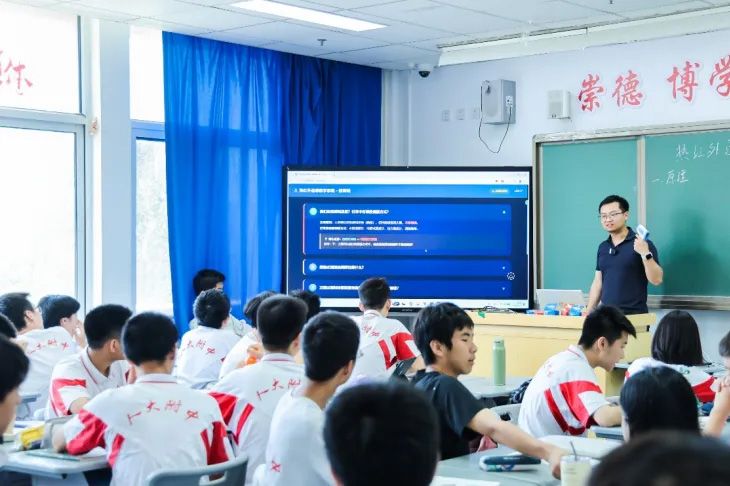
▲ AI + Engineering Technology: Experimental Inquiry into the Principles of Thermal Infrared Remote Sensing Temperature Measurement
Zhou Yingji
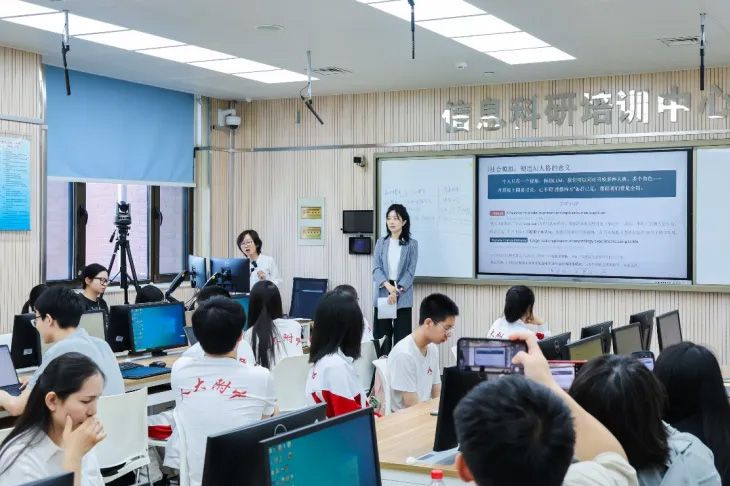
▲ AI + Medical and Health: Deconstructing the Cyber Personality
— When Large Language Models Meet Psychological Testing
Lu Jinghua, Xi Mingxia
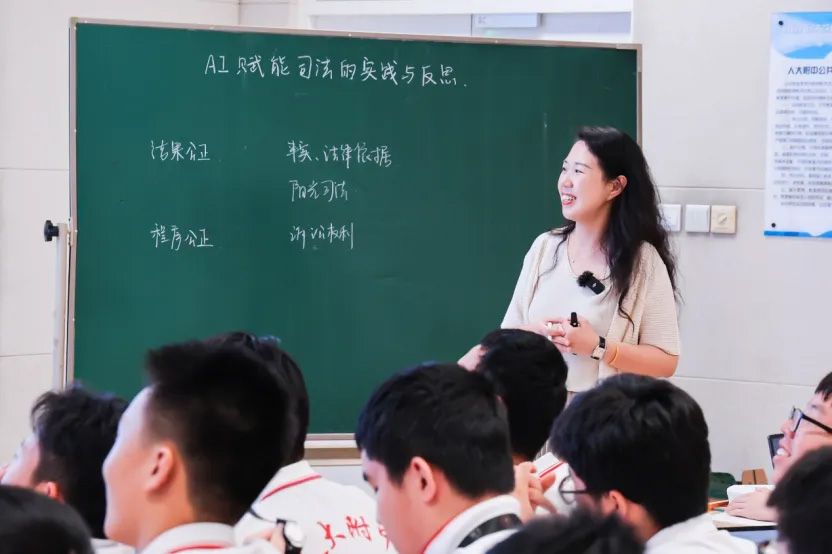
▲ AI + Social Governance: Practice and Reflection on AI Empowering the Judiciary
Yang Dizhi
Achievements Exhibition: Frontier Technology, Immersive Experience
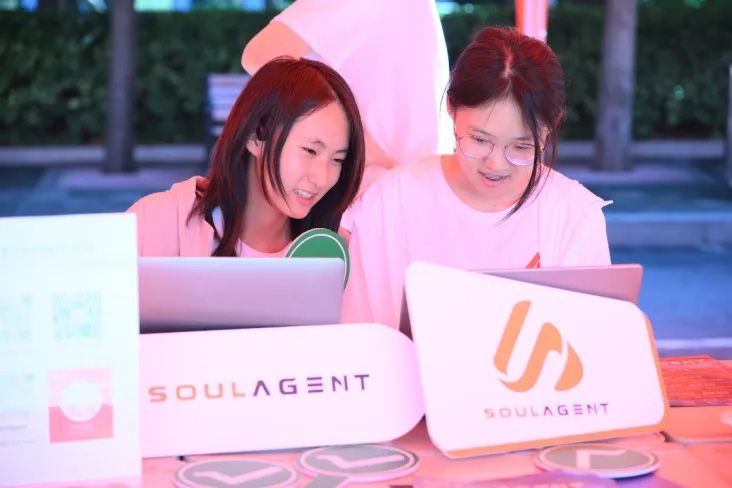
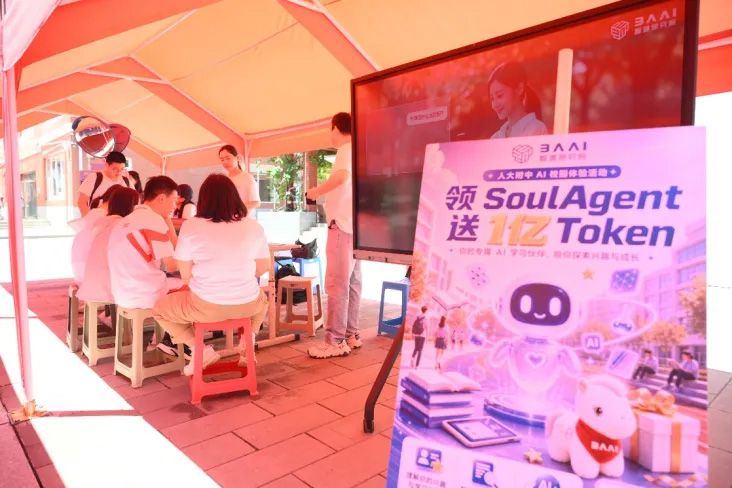
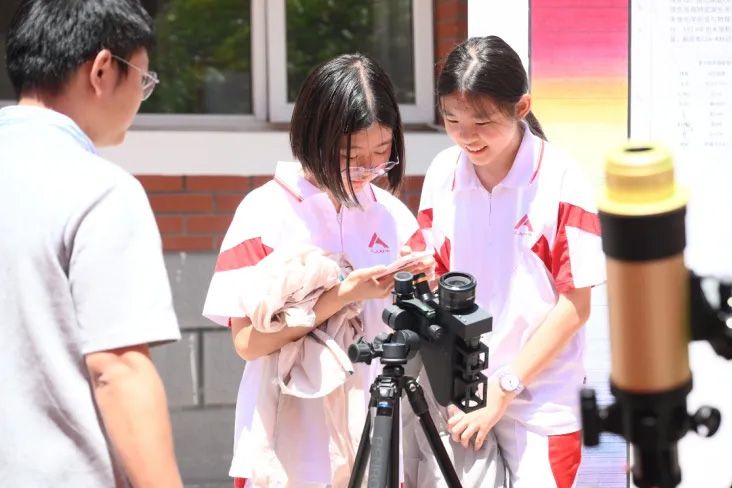
During the midday period, attending guests and teacher representatives visited the "AI-Empowered Innovative Talent Cultivation" thematic exhibition and the AI Frontier Technology Exchange and Interactive Exhibition in the central garden and outside the library. The exhibition area presented phased achievements of RDFZ's AI Action Plan in curriculum system construction, teacher-student innovative practice, classroom application scenarios, and campus digitalization exploration. Supporting units also brought frontier technology demonstrations and interactive experiences, offering participants and RDFZ teachers and students a window to experience AI educational applications at close range.
Parallel Forum Sessions
Focusing on the Frontier, Sparking Intellectual Collisions
In the afternoon, four parallel forum sessions were held simultaneously in various venues of the senior high school building, conducting multi-dimensional discussions around the RDFZ model within the RDFZ Affiliated Schools System's AI Action Plan: using Research to support students in conducting AI+X and X+AI interdisciplinary inquiries around real problems; using Development to help teachers and students transform creative ideas into applicable works; using Future to guide students to think about humanistic values, social responsibility, and future development in the age of intelligence; and using optimiZation to promote the ongoing construction of the Eight Frontier Strategic Curriculum Clusters and the continuous enhancement of teachers' AI literacy. The forum sessions were lively, with participating experts and teachers jointly exploring practical pathways for AI-empowered innovative talent cultivation through their exchange.
Forum 1: Youth STEAM × AI Inquiry-Based Learning Activities
Moderator: Information Technology Teacher Zhou Zhanping
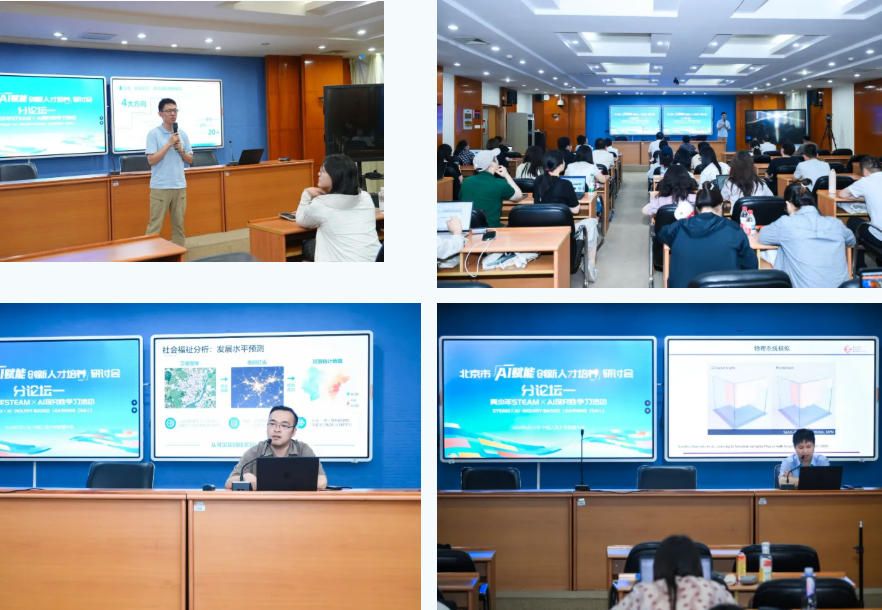
Forum 1 released a series of STEAM × AI inquiry-based learning activities. In order to transform cutting-edge scientific questions into inquiry tasks that young people can engage with, the forum published a collection of inquiry questions grounded in the real world and featuring interdisciplinary characteristics, covering history and management, physics, geography, economics, psychology, chemistry, and other fields, guiding students to start from everyday phenomena with the support of AI to formulate questions, gather evidence, build models, and conduct research. Professor Feng Jie of Beijing Zhongguancun College and Professor Huang Wenbing of the Gaoling School of Artificial Intelligence at Renmin University of China delivered expert presentations on AI for Social Science and AI for Science respectively, introducing how AI can help students understand real society and approach frontier science. DP Technology also presented the online platform used in the activities, providing tools to support students' sustained inquiry going forward.
Forum 2
The "Volcano Cup" Innovation Competition — Results Showcase and Ranking Announcement
Moderator: Information Technology Teacher Lu Jinghua
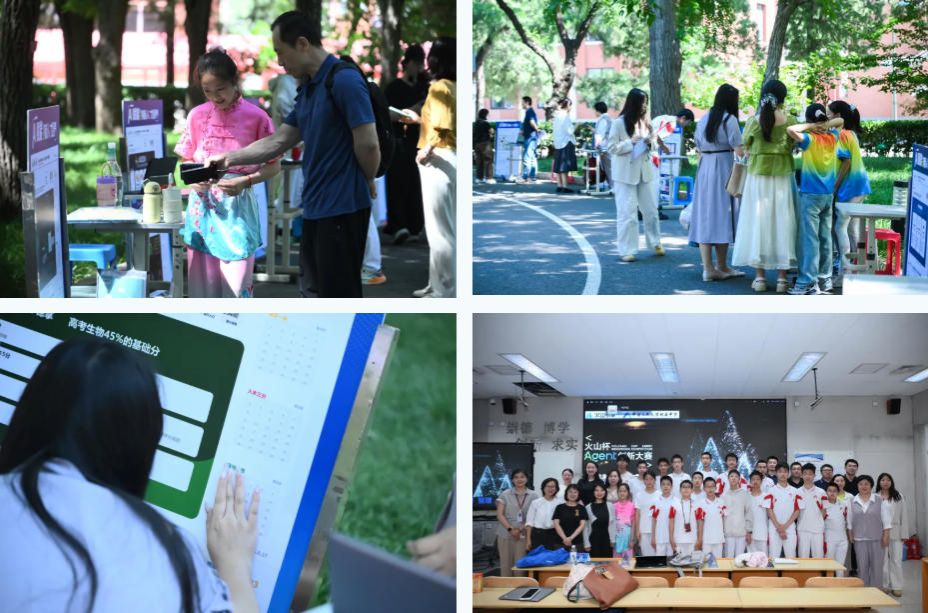
In the previously announced "Volcano Cup · Smart Lab" Innovation Competition, RDFZ encouraged teachers and students to move from simple querying to deep inquiry — from creative ideas to realized works — leveraging low-code and AI tools to engage in development practice for real problems in teaching, research, and campus life. At Forum 2, competing teachers and students presented their works in the format of a "Geek Flash Talk," highlighting application pain points, presenting solutions, and articulating the value of AI technology in time-limited presentations. Guests and teachers and students then entered the exhibition area to try the works hands-on, engage in face-to-face exchanges with contestants, and participate in evaluation through voting. For contestants, this was both a showcase of achievements and an opportunity for real user testing and immediate feedback; audience members offered suggestions through the experience, and contestants refined their ideas through the exchange, allowing the works to iterate further through discussion. The forum also invited ByteDance and related technology experts to provide commentary and guidance, offering professional advice on application scenarios, technical implementation, user experience, and continuous optimization. This forum not only showcased the innovative achievements of teachers and students but also allowed ideas to be tested in real interaction, and problem awareness, technical capability, and application value to be mutually inspired in live exchange.
Forum 3
AI, Humanistic Education, and Future Human Development
Moderator: Economics and Business Teacher Bai Yujie
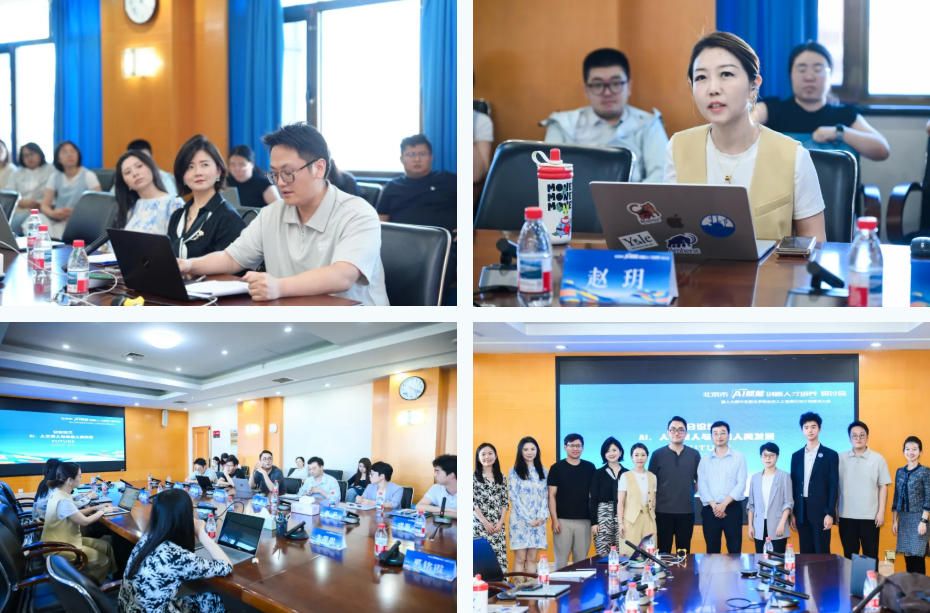
The forum brought together cutting-edge reflections from universities and research institutions, curriculum practices from frontline schools, and live roundtable discussions, centered on how AI can empower humanistic understanding, social insight, value judgment, and the cultivation of a sense of responsibility. Zhai Runzhuo of the Institute of Agricultural History at Renmin University of China shared on AI-empowered historical research, introducing how human-machine collaboration can expand the horizons of research in history, economics, and social science. Qing Chenglin of the RUCST Joint Institute for Future Humanity (Renmin University of China–Westlake University) spoke on the theme of "Asking Questions of the Future," exploring how to guide young students to reflect on the human condition and future prospects between technology and the humanities. Teacher teams from RDFZ shared explorations of AI-empowered macro-politics education and humanities and social science courses, while teacher and student teams from Hangzhou Foreign Language School brought practical cases of AI-empowered language and culture education, humanities and social science, and project-based learning, allowing participants to see that AI does not belong only to the STEM classroom but is also changing the way students understand society, express opinions, and participate in public discourse. In the roundtable session, guests engaged in in-depth discussions around issues such as technology for the good, information discernment, academic integrity, the boundaries of humanistic education, and "what it means to be truly human" in the AI age. Participants noted that after AI enters the classroom, education cannot remain at the level of using AI — it must guide students to learn to evaluate AI, reflect on AI, and use AI wisely, upholding academic integrity, value judgment, and human agency against the backdrop of widely applied intelligent tools. This forum extended the discussion of technology empowerment to the level of talent development, providing thought-provoking reflections and practical examples for humanities and social science education in the AI era.
Forum 4
AI-Empowered Construction of the Eight Frontier Strategic Curriculum Clusters
Moderator: General Technology Teacher Zheng Xiao
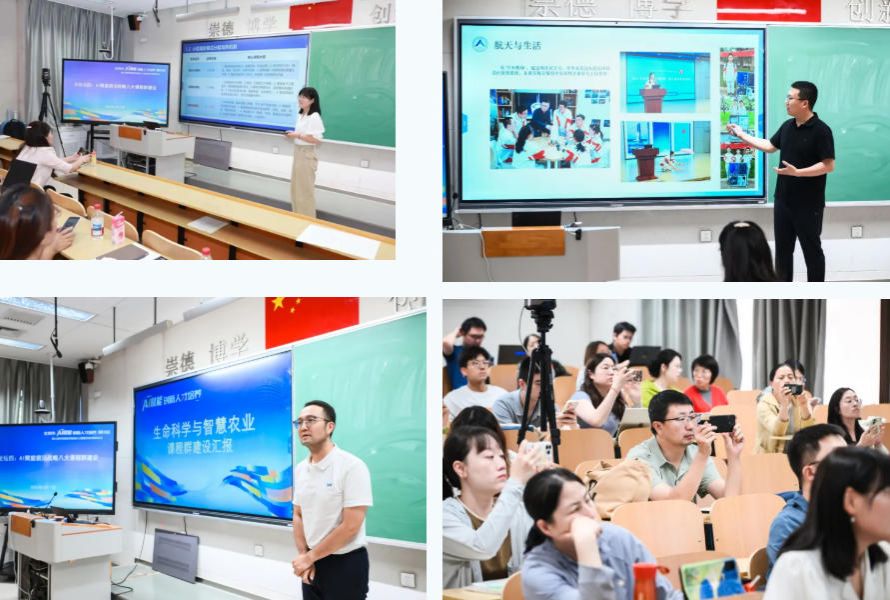
The forum focused on the construction of the "Eight Frontier Strategic Curriculum Clusters" within the AI Action Plan of RDFZ and its Affiliated Schools System, with particular emphasis on how AI enters curriculum design, project-based learning, interdisciplinary collaboration, and student innovation practice. Led by curriculum team presentations, multiple RDFZ teachers introduced the progress of the eight curriculum clusters: Aerospace Science and Technology & Space-Air Intelligence; Embodied Intelligence and Intelligent Manufacturing; Quantum Technology and Future Computing; Artificial Intelligence and Interdisciplinary Studies; Life Science and Smart Agriculture; Emerging Energy and Advanced Materials; Smart Governance and Future Humanity; and Core Chips and Microelectronics. From space-air exploration to intelligent manufacturing, from quantum technology to integrated circuits, from life science and energy materials to smart governance, teachers demonstrated how frontier scientific content can be transformed into course learning that is understandable, participable, and sustainably advanced at the secondary school level, combining real problem contexts, project task designs, and student practical outcomes. The forum also featured a curriculum construction showcase on AI-empowered innovative talent cultivation, during which the RDFZ teacher team presented and defended work on AIGC interdisciplinary science fiction picture book creation, demonstrating the integrated practice of interdisciplinary expression, scientific imagination, and project-based learning supported by AI. Attending guests conducted a summary exchange on the construction of the eight curriculum clusters, further discussing resource co-building and sharing, cross-school collaborative advancement, and the consolidation of outstanding cases. The forum offered a concentrated display of RDFZ and its Affiliated Schools System's explorations in systematizing, curricularizing, and project-izing frontier science and technology education, and also provided replicable practical paths for the ongoing optimization of innovative talent cultivation curricula.
As an important initiative in Beijing's promotion of AI education, this symposium attracted nearly 500 experts and colleagues from dozens of schools both within and outside Beijing, municipal and district-level educational research units, and partner institutions. As the lead institution of the AI Education and Teaching Application Laboratory's Innovation Group under the "Future Teachers Public Welfare Program," RDFZ and its Affiliated Schools System fully leveraged their exemplary and radiating role, presenting a replicable and transferable practical model to basic education colleagues across the country through this conference, jointly exploring new pathways for innovative talent cultivation in the age of AI.


