RDFZ News (Reporters: Li Pu, Yan Xinxia) — On November 19, 2025, the 2nd Secondary School Biology Experimental Teaching Seminar, hosted by the School of Mathematics and Science Education of Beijing Institute of Education and co-organized by the High School Affiliated with Renmin University of China, was successfully held at RDFZ under the theme "Integrating Experimental Wisdom to Cultivate People Through Practice."
This seminar focused on the implementation pathways of experimental teaching, aiming to promote innovation in experimental teaching, reform of the assessment system, and cross-disciplinary integration. RDFZ biology teachers showcased the Teaching and Research Group's explorations in experimental teaching design and assessment, and front-line teachers from across Beijing shared their thoughts and innovations in improving experimental teaching.
The seminar opened in the Yifu Building auditorium at RDFZ, with more than 200 representative biology teachers from various districts and counties of Beijing present at the venue. The seminar was live-streamed nationwide via an online platform, with 13,000 teachers and educators from Inner Mongolia, Xinjiang, Guangdong, Shandong, Zhejiang, and other regions attending online.
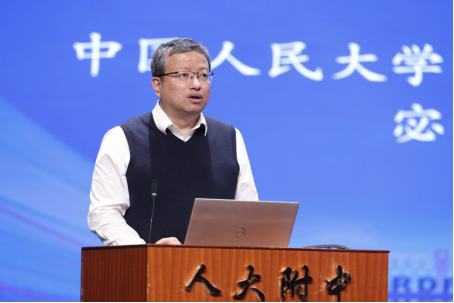
In his speech, RDFZ Principal Mi Qi emphasized that Beijing, as the capital city, is mapping out a new chapter in science education with forward-looking vision. The Municipal Education Commission has explicitly proposed building a growth platform for students to "do real research in real contexts." RDFZ's biology group adheres to the philosophy of "student-centered and competency-oriented," sharing stories from the history of science, developing and completing extended experiments, and making the classroom a garden where teachers and students jointly explore the mysteries of life.
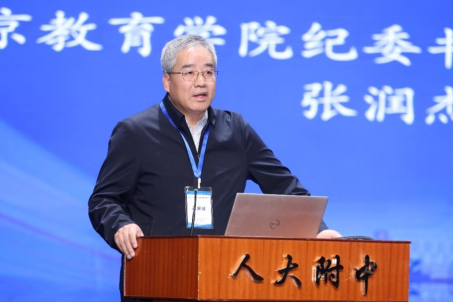
Zhang Runjie, Secretary of the Discipline Inspection Committee of Beijing Institute of Education, said in his speech that teachers must uphold their founding mission of nurturing talent, treat experimental teaching as an important means of cultivating students' scientific literacy, let students feel the mysteries of life and experience the power of science through practice, and cultivate awe and curiosity toward nature and life.
Both leaders emphasized the important role of experimental teaching in the process of cultivating students' core competencies, and encouraged all participants to take the seminar as an opportunity to realize disciplinary educational goals through experimental teaching, empowering the development of students' comprehensive competencies and innovative abilities.
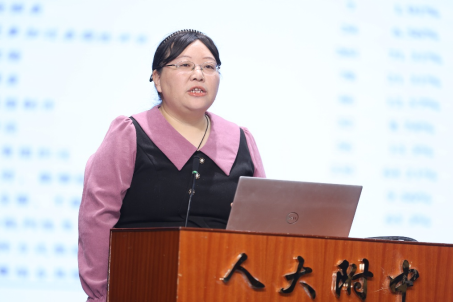
Dr. Xu Yang, Director of the Biology Teaching and Research Office of Beijing Institute of Education, delivered a special lecture titled "Design and Implementation of Evaluation Rubrics for Secondary School Biology Experimental Teaching." Dr. Xu Yang believes that the charm of biology experiments lies not only in allowing students to understand basic processes and steps, but more importantly in cultivating students' scientific inquiry abilities and achieving "learning by doing." Evaluation rubrics provide guidance for students' learning. The lecture shared innovative ideas for experimental teaching assessment in a manner that combined theory with practice, directly addressing the difficulties of front-line teachers in designing performance-based assessment for experiments, providing precious pedagogical guidance to the teachers present.
In the morning, 6 teachers from RDFZ showcased live lessons.
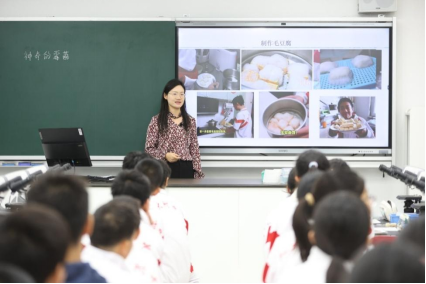
Teacher Li Huiyong's "Amazing Mold" lesson began from contexts familiar to students, using "making mold tofu at home" as the scenario. Through microscopic observation and multi-sensory comparison, students were guided to explore the structure and function of mold from phenomenon to essence, embodying the teaching characteristic of "learning by doing."
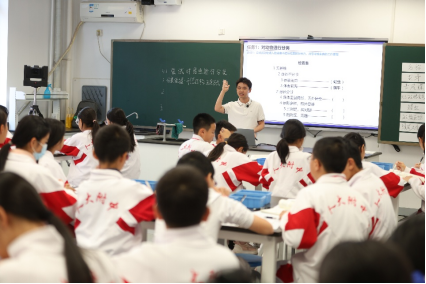
Teacher Li Chaoyue's "Attempting to Classify Insects" lesson guided students to learn to use the dichotomous classification method by observing the morphological characteristics of insect antennae, legs, and wings. The activity had strong practical components, with high student engagement, allowing students to master the basic methods of biological taxonomy.
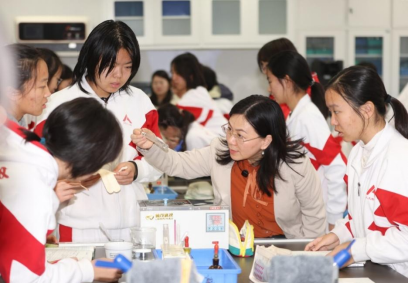
The 10th grade research lesson theme was "Enzymes That Lower the Activation Energy of Chemical Reactions."
Teacher Yan Xinxia, Head of the RDFZ Biology Teaching and Research Group, guided students to review historical experiments in the history of science, allowing students to understand the function and nature of enzymes based on evidence, appreciate the roles of thinking, empirical evidence, and questioning in scientific development, directing toward nature-of-science education, guiding students to analyze experimental results in conjunction with chemical principles, and reaching the conclusion that "enzymes can significantly lower the activation energy of reactions" — knowledge emerges from practice.
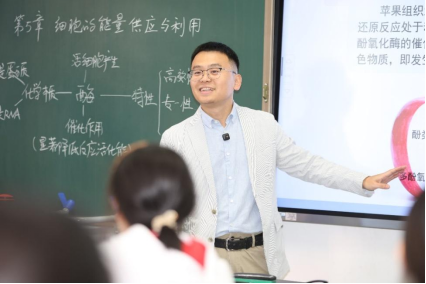
Teacher Li Pu designed an experimental lesson with "inhibiting the browning of apple juice" as the exploratory goal, guiding students to use existing knowledge to form hypotheses, carry out experimental design and implementation, and combining classroom experiments with after-school inquiry group explorations, allowing students to understand the multiple factors affecting enzyme activity. Finally, the results of the extended experiments were transformed into a learning task for the entire class, with scientific suggestions made for production practice, allowing students to improve their scientific inquiry and engineering practice abilities.
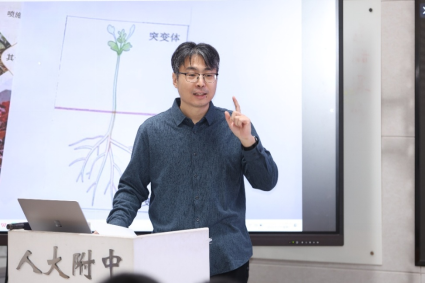
The 11th grade research lesson unit theme was "The 'Green Preservation' Plan for Spinach."
Teacher Cai Lei's lesson was organized around the "spinach green preservation" project. Through three progressively structured activities — graft experiments to verify hormone transport, model simulation to construct regulatory networks, and exploratory experiments to design optimization plans — inquiry and practice were organically combined with cross-disciplinary thinking, effectively improving students' comprehensive competency to solve real problems.
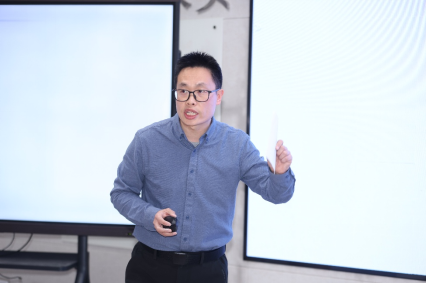
Teacher Lei Yang used a multimodal AI platform to perform non-contact quantitative analysis of the green color differences in spinach leaves after hormone treatment. This breakthrough beyond the limitations of traditional experiments fulfilled curriculum standard requirements, cultivated students' scientific thinking and data literacy, and achieved dual improvement in knowledge and abilities.
These lessons took experiments as the essential path for obtaining evidence, guiding students to find answers to problems in real operations and rigorous logical analysis, and forming scientific concepts. While mastering scientific knowledge, students developed scientific thinking and honed their abilities to observe, analyze, and solve problems, as well as the scientific spirit of daring to question and innovate.
After the lessons, lesson critique sessions were held separately for the junior high and senior high school stage courses. The experts fully affirmed the teaching philosophy of "student-centered, inquiry-based" in the lesson examples, and provided professional advice on issues such as optimizing experimental design and implementing disciplinary core competencies, offering powerful guidance for front-line teachers' experimental teaching practice.
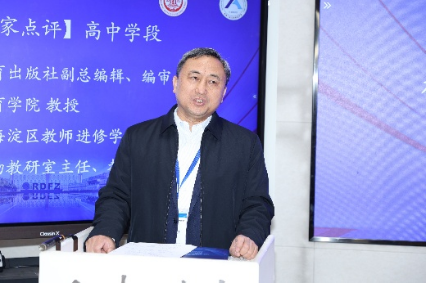
Tan Yongping, Deputy Editor-in-Chief and Senior Editor of People's Education Press, commented on the two 10th grade lessons. He fully affirmed the practice of using the history of science and leading all students to complete experiments in both lessons, and shared three reflections: knowledge grows — understand, question, and explore like a scientist to form understanding; student experiments must be done — record experimental results truthfully, solve problems, and improve competency through personal experience; knowledge is connected with the natural world and society — teaching should reflect the combination of science, technology, and society.
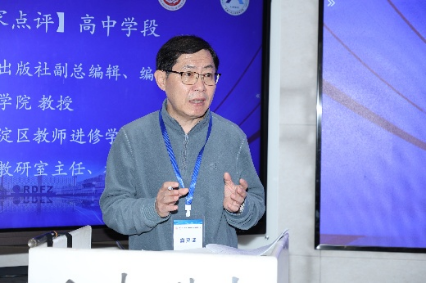
Liu Zhonglie, Head of the Secondary School Biology Teaching and Research Office of Haidian District Teacher Training School, discussed "where to add 'additions' in science education" in relation to the two 10th grade lessons. He summarized four aspects: first, add "doing" — the role of experiments and practice in secondary school biology teaching is irreplaceable; second, add "flavor" — let students think while solving real problems, teaching the flavor of a science lesson; third, add "assessment" — assessment should be goal-directed and competency-level-directed; fourth, add "connotation" — enrich the curriculum content through reconstructing the teaching content.
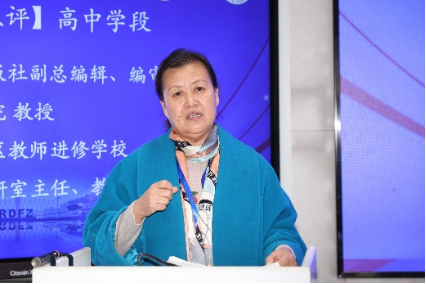
Professor Hu Yuhua of Beijing Institute of Education believed that the two "spinach green preservation" lessons in 11th grade were highly creative. The holistic unit design promotes the structuring of students' knowledge; the life-connected contextual tasks give students rich experiences and progressive thinking; the teachers' appropriate assessment captures the highlights of students' performance, promoting students' transfer to higher-level learning.
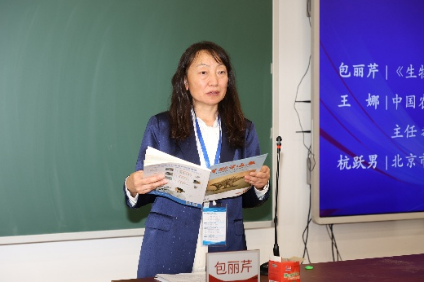
Bao Liqin, Editor-in-Chief of Biology Teaching Bulletin, fully affirmed the outstanding performance of the two junior high school lessons in strengthening students' practical participation and deepening teacher-student interaction, believing that the classroom achieved significant results in cultivating students' life concepts and scientific thinking. She emphasized that excellent teaching practices can be transformed into teaching research papers through journal platforms, and suggested cutting in from the innovation points in the lesson examples to allow quality experience to radiate more broadly.
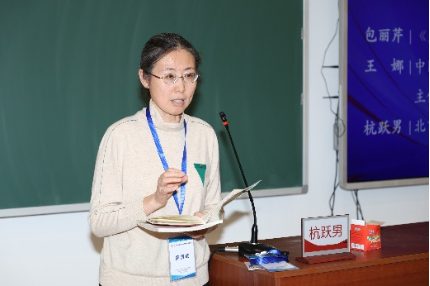
Professor Wang Na of China Agricultural University focused on the core teaching logic and made suggestions. She praised the instructors' solid professional foundations and the progressively deepening classroom organization, and suggested that objective formulation can refer to the science classification method, that analysis of students' learning conditions should be closely linked to the prerequisite knowledge of specific knowledge points, and that assessment can use diverse means such as AI image analysis and red-green sticky note feedback.
Teacher Hang Yuenan of Haidian District Teacher Training School emphasized from the perspective of the disciplinary essence that biology teachers should become "representatives of the scientific community," leading students to reproduce the scientific inquiry process. She believed that both lessons successfully practiced the scientific thinking cultivation model of "observation — questioning — argumentation," and particularly affirmed the breakthrough of teaching difficulties in the "Attempting to Classify Insects" lesson, suggesting that teachers dig deeper into the connections between the textbook and scientific research to help students master the basic methods of scientific research.
The expert commentary both affirmed the practical achievements of biology experimental teaching and clarified optimization pathways, providing front-line teachers with teachable thinking and methods for achievement transformation, helping biology teaching advance more deeply toward a competency-oriented direction.
At noon, the experimental teaching experience area in RDFZ's laboratory building was bustling with activity. 18 experiment experience and poster exhibition projects concentrated on presenting innovative achievements in secondary school biology experimental teaching across Beijing.
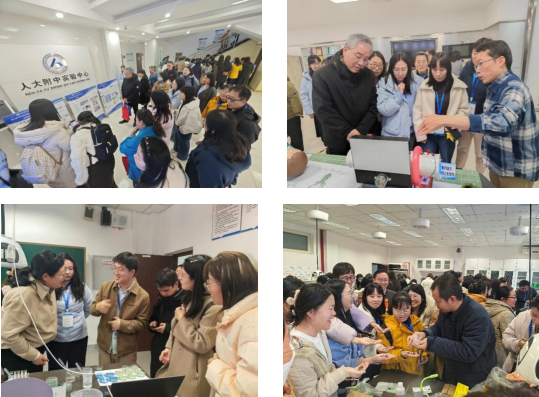
These included Huiwen Middle School's homemade Leeuwenhoek-style microscope and homemade spectrometer, and No. 166 Middle School's homemade spectrophotometer and AI food chain dynamic simulation platform.
Teacher Wang Ye of No. 161 Middle School in Xicheng District designed an interactive "Raspberry Pi" experiment and "push-and-play" interactive software that cleverly combined information technology with biology teaching, combining both entertainment value and scientific rigor. Teacher Zhao Yaoyao of Sanfan Middle School's "paramecium taxis experiment apparatus" restricted the movement range of paramecia, allowing for the exploration of paramecia's reactions to various stimuli.
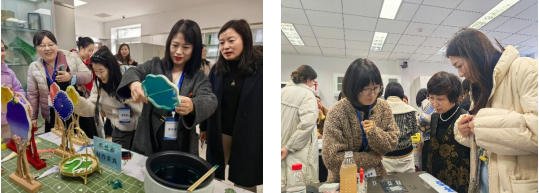
Teacher Lu Xiaowei of the Beijing Normal University Affiliated High School's "tablet + simple photometer" experiment, Teacher Zheng Guohua of Niulanshan No. 1 Experimental High School's "silk fan making," Teacher Yang Chong of the Fengtai Affiliated High School of Beijing Institute of Education's homemade eye model, and the kidney perfusion model experiment brought by Tongzhou District, among other on-site experiments, covered multiple dimensions including model making, technological innovation, and life practice, demonstrating innovative cross-disciplinary integration ideas and letting participants feel the infinite possibilities of biology experimental teaching.
In the afternoon lesson explanation segment, 15 outstanding teachers from various districts of Beijing conducted lesson-explanation presentations in two venues for junior high and senior high school experimental teaching cases. The content included optimization experiments for DNA rough extraction and identification, AI-assisted fossil reconstruction, and more. Teachers elaborated on competency implementation, teaching objectives, experimental design, the teaching process, and experimental teaching assessment, sharing their thoughts and innovations in experimental teaching with impressive presentations. Expert commentators and on-site teachers engaged in in-depth exchanges around the lesson explanation content, exploring issues such as improving the interest of experimental teaching, effectively integrating disciplinary core competencies, and AI empowerment. The atmosphere for teaching and research was intense.
This biology experimental teaching seminar, through rich and diverse activity formats, built a platform for showcasing and exchanging experimental teaching achievements, demonstrated the innovative vitality of biology experimental teaching in Beijing's secondary schools, and coalesced a shared educational vision of "promoting inquiry through experiments and cultivating spirit through practice." Participating teachers expressed that the innovative thinking and practices of their peers gave them much inspiration, and that expert guidance gave them a deep appreciation for the formal innovation and assessment diversity of experimental teaching. They stated that they would deepen the conduct of experimental teaching and practical activities in future biology teaching, promote the development of students' scientific thinking and scientific inquiry competencies, and embody the talent cultivation value of science education.


